Service BluePrint
Co-Designing Solutions for the Future of Dining Experience in Higher Education
Using participatory methods to co-create actionable AI dining experiences
Services
YEAR
Services
YEAR
Secondary Research | Research METHODOLOGIES | QUALITATIVE RESEARCH | DESIGN THINKING methods | DATA ANALYSIS | Stakeholder Needs | STakeholder Mapping | STAKEHOLDER INTERVIEWS | Workshop Facilitation | infographic + VIsual Mapping | SERVICE DESIGN | SERVICE BLUEPRINT |
2026
SECONDARY RESEARCH | RESEARCH METHODOLOGIES | QUALITATIVE RESEARCH | DESIGN THINKING METHODS | DATA ANALYSIS STAKEHOLDER NEEDS | STAKEHOLDER MAPPING | STAKEHOLDER INTERVIEWS | WORKSHOP FACILITATION INFOGRAPHIC + VISUAL MAPPING | SERVICE DESIGN | SERVICE BLUEPRINT |
2026
Services
YEAR
Secondary Research | Research METHODOLOGIES | QUALITATIVE RESEARCH | DESIGN THINKING methods | DATA ANALYSIS | Stakeholder Needs | STakeholder Mapping | STAKEHOLDER INTERVIEWS | Workshop Facilitation | infographic + VIsual Mapping | REPORT WRITING | REPORT DESIGN |
2025
How might the organisation harness dining analytics to deliver personalized student experiences that drive partner recruitment and retention?
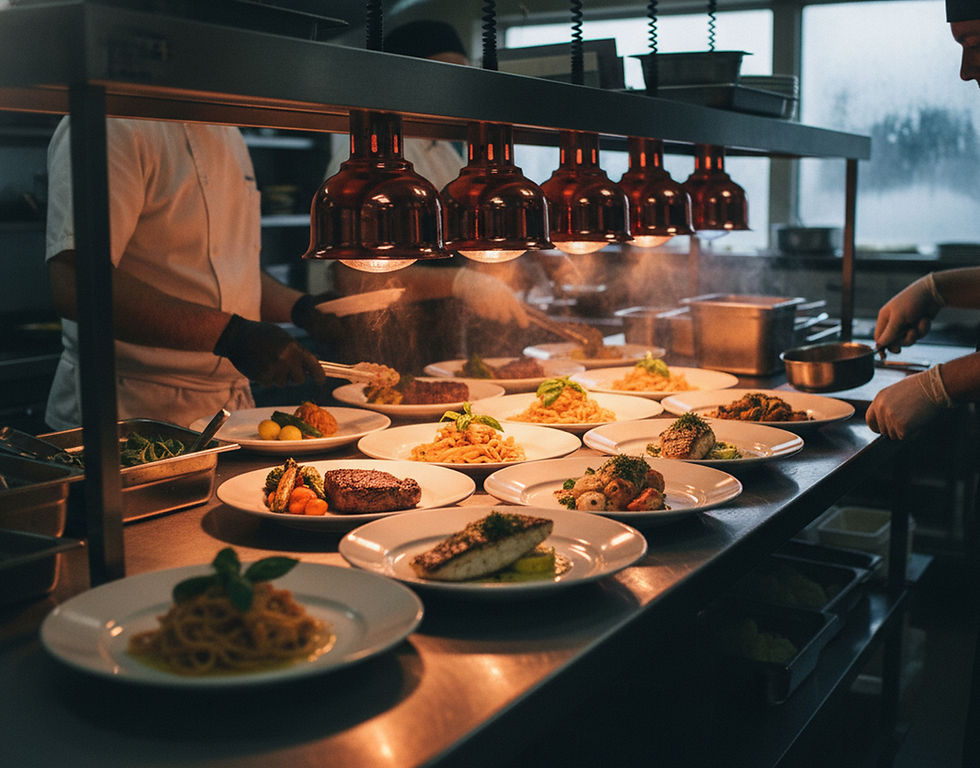
Chartwells Higher Education—a division of Compass Group North America—delivers end-to-end campus dining programs designed to drive recruitment, retention, and student satisfaction.
Core Service Pillars
-
Residential Dining: Custom meal plans and residential hall dining
-
Retail Dining: Mix of national, proprietary, and local restaurant brands
-
Catering & Hospitality: Executive, academic, and campus event catering
-
Athletics & Special Events: Venue concessions and game-day hospitality
-
Micro Markets & C-Stores: Grab-and-go retail and 24/7 autonomous markets

400 U.S. campuses
1M+ students served daily
$2.7B annual sales
STRATEGIC POSITIONING
Chartwells transforms campus dining from an operational service into a strategic enabler—combining culinary innovation and community building to enhance the overall university experience.
TASK
Compass Digital Ventures (CDV)—the Digital Innovation Team of Chartwells partnered with the regional operators to co-design AI and digital solutions while navigating mounting enrollment pressures, evolving student expectations, and rising operational costs.

CONTEXT
-
Co-Design Sessions: The central digital innovation team hosted an immersion workshop with regional operating teams to uncover operational friction, alongside a full-day AI solution workshop with an external innovation partner and teams across major university campuses.
-
Technical Foundation: The digital team manages the organization's central technology ecosystem, spanning mobile ordering, payments, data analytics, and robotics.

OBJECTIVE
The central digital innovation team executed a structured, three-stage approach to evaluate emerging technologies and deploy high-impact solutions across operations.
-
Strategic Opportunity Discovery
-
Startup Sourcing & Evaluation
-
Validation & Execution Roadmap
Strategic Opportunity Discovery
Explored core innovation areas to pinpoint targeted opportunities for future Proofs of Concept (PoCs) and pilot programs.
Maintained an adaptable scope to integrate new problem areas and opportunities as discovery progressed.
Startup Sourcing & Evaluation
Actively scouted, interviewed, and evaluated prospective startups across key thematic areas.
Synthesized evaluation data to build vetted, actionable recommendations for implementation.
Validation & Execution Roadmap
Finalized pilot and PoC opportunities with selected startup partners.
Conducted on-the-ground operator immersion sessions to validate operational alignment and user needs.
DESIGN PROCESS
-
Insight Synthesis and Theme Extraction: Processed raw session data from stakeholder interviews, that included student and operator pain points, emotions, and touchpoints, and captured them into structured, actionable thematic narratives.
-
Hybrid Blueprint Architecture: Designed single-page, multi-layered visual frameworks integrating the end-to-end Customer Journey (top layer) with the supporting Service Blueprint (frontstage actions, backstage processes, and digital tools).
-
Current vs. Future State Modelling: Mapped baseline operational friction against future-state vision, explicitly highlighting high-impact innovation opportunities and organizational ownership across each phase.


DESIGN PROCESS
-
Executive Visual Storytelling: Replaced informal sticky-note outputs with clean, highly scannable infographic-style visuals that translated complex service design ecosystems into board-ready narratives.
-
High-Fidelity Deliverable Strategy: Built editable, presentation-ready design assets that served both as strategic pitch artifacts for leadership and as working blueprints for operational teams.

FROM INSIGHTS TO OPPORTUNITY
As a Service Designer, my role was to translate diverse stakeholder perspectives into a clear, shared understanding of the future campus dining experience. Through collaborative activities, I helped stakeholders move from individual needs and pain points to "themes", and "service opportunity" areas. By clustering and synthesizing the workshop outputs, I mapped recurring patterns across student experience, operational efficiency, client needs, technology, sustainability, and people.
The workshop created a space where operators, and university stakeholders could bring their different perspectives together. Rather than designing solutions in isolation, the process enabled participants to collectively identify challenges, explore the potential of AI and automation, and co-create opportunities grounded in real needs.
The resulting map became a shared visual language and strategic tool—connecting stakeholder needs to multiple opportunity areas for the future of campus dining and providing a foundation for developing more personalized, efficient, connected, and sustainable experiences.
ICONOGRAPHY
Using isometric graphic layering, I translated the workshop outputs into a visual journey—mapping baseline operational opportunities against the future-state vision, while highlighting high-impact innovation opportunities and ownership across each phase.
Complex stakeholder insights were transformed from informal sticky-note outputs into clean, highly scannable infographic visuals, creating a clear, board-ready narrative of the future campus dining ecosystem.


OMNICHANNEL SERVICE ECOSYSTEM DESIGN
This service design framework transforms complex, multi-stakeholder dining ecosystems into clear visual architecture. By connecting front-of-house guest touchpoints with back-of-house operational workflows and long-term sustainability models, this project bridges business strategy, user experience, and technical feasibility into an actionable innovation roadmap.
VISUAL & DESIGN
ARCHITECTURE
Isometric Grid & Spatial Context
The visual architecture is built upon a cohesive 3D isometric grid, rendering physical touchpoints—from dining halls and micro-markets to smart kiosks and mobile interfaces—onto elevated platform tiles to establish equal weight across hardware, software, and human interactions. These micro-vector dioramas contextualize complex service steps within tangible real-world environments, building immediate spatial empathy for user behaviours across both physical and digital spaces.

VISUAL & DESIGN
ARCHITECTURE
Color-Coded Domain
To make a dense, multi-stakeholder ecosystem effortlessly scannable, the graphic system employs a distinct color-coded visual taxonomy. Cool blue defines front-of-house customer experience and mobile ordering loops; sage green grounds back-of-house operator efficiency and kitchen logistics; teal-green maps high-level future innovations and campus tech integrations; and vibrant lime green isolates circular sustainability frameworks alongside agile sprint deliverables.

VISUAL & DESIGN
ARCHITECTURE
Non-Linear Information Hierarchy
Instead of rigid, left-to-right flowcharts, interlocking circular tracks and wave pathways depict service interactions as continuous, non-linear feedback loops. Information is structured across three distinct scanning layers—ambient background process zones, primary platform tiles, and high-contrast callout banners—while leader lines route detailed operational notes cleanly to the outer margins. This layered hierarchy ensures the primary service path remains uncluttered and intuitively structured for cross-functional alignment.


Service Design Strategy & Opportunity Mapping
Omnichannel Integration
By placing digital interactions (mobile apps, web dashboards, self-checkout) along the exact same path as physical touchpoints (dining halls, micro-markets, vending), the design eliminates channel silos and highlights transition friction across media.
Strategic Innovation Callouts
High-contrast banner nodes pinpoint exact focus areas for organizational growth and efficiency, including:
• Revenue & Loyalty Growth: Identifying high-impact touchpoints to increase visit frequency, average spend, and subscription plan adoption.
• Transition & Decision Points: Highlighting key decision forks (e.g., payment, customization, fulfillment) where drop-off risk is highest.
• Backstage Optimization: Mapping operational bottlenecks in inventory, prep, and staffing directly to frontstage customer satisfaction.
Sustainable Service Loops
The Cafe of Tomorrow framework weaves real-time AI analytics and circular sustainability directly into daily operations, establishing closed-loop systems for waste reduction, energy tracking, and unit-level accountability.
Actionable Innovation Deliverables
To bridge high-level service vision with product execution, key opportunity areas were also translated into four modular, sprint-ready product concepts that are not showcased in this case study due to project confidentiality.


A section of this project is showcased because it is still underway and evolving. The service blueprint was prepared as Phase 2 workshop project delivery in collaboration with Compass Digital Ventures, Canada.
DURATION - JAN 2025 TO March 2026
ImageS - Unsplash and Documented IMAGES FROM THE WORKSHOP